Introduction
Balsam is one of the most familiar seasonal flowering plants grown in home gardens, school gardens, and rural landscapes. Known for its soft stems, bright flowers, and quick growth, balsam is widely planted during the rainy season in many parts of South Asia. It is especially popular in Nepal because it grows easily from seed and produces abundant blooms even with simple care.
The plant is commonly called garden balsam, rose balsam, or touch-me-not. It has been cultivated for centuries as an ornamental annual and remains a favorite among beginner gardeners. One of its most interesting features is its seed pods, which burst open when touched, scattering seeds naturally. This makes it easy for the plant to self-propagate in gardens.
Balsam is valued not only for its attractive flowers but also for its adaptability. It grows well in beds, borders, and even simple backyard plots. Because it flowers heavily during the monsoon season when many other ornamentals struggle, balsam is considered a reliable rainy-season flower.
Scientific Classification
Kingdom: Plantae
Division: Magnoliophyta
Class: Magnoliopsida
Order: Ericales
Family: Balsaminaceae
Genus: Impatiens
Species: Impatiens balsamina
Common name: Garden balsam
Native origin: South and Southeast Asia
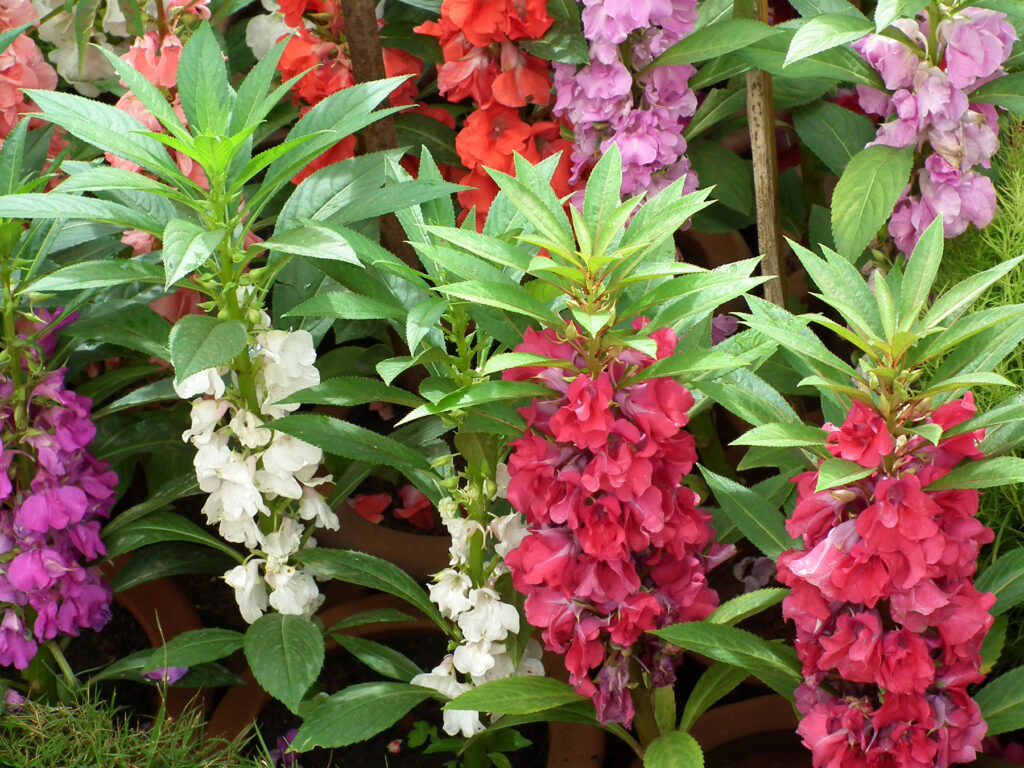
Popular ornamental forms include single-flowered and double-flowered types in shades of pink, red, purple, white, and mixed colors.
Identification of Plant
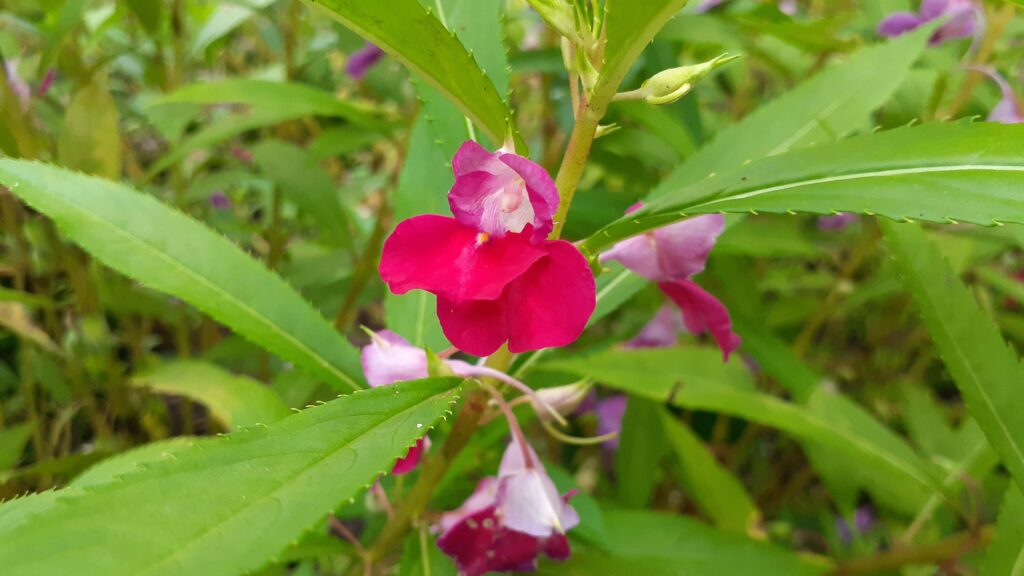
Balsam is a fast-growing annual herb that develops soft, succulent stems and narrow green leaves arranged alternately along the stem. The leaves have slightly serrated edges and a tender texture.
The flowers grow close to the stem and may appear singly or in clusters. They resemble small roses in double varieties and have a soft, delicate appearance. Colors range from pale pink and white to deep purple and red.
One of the most distinctive features of balsam is its seed capsule. When mature, the capsule bursts open at the slightest touch, scattering seeds around the plant. This explosive seed dispersal makes balsam very easy to naturalize in gardens.
Climate and Soil Requirement
Balsam grows best in warm and humid climates. It performs especially well during the rainy season, which makes it ideal for monsoon gardening in Nepal. The plant prefers temperatures between 20–30°C and grows rapidly when moisture is available.
For successful cultivation:
Choose a location with full sun to partial shade.
Use loose, well-drained soil enriched with compost.
Avoid waterlogged heavy clay soil, which may cause root problems.
Moderate soil fertility supports better flowering than overly rich soil.
Because balsam thrives in moist environments, it is often one of the few flowers that perform well during prolonged rainy periods.
Propagation and Planting Method
Balsam is almost always grown from seed, and direct sowing is the simplest and most reliable method.
Seeds can be sown directly into prepared garden beds or small nursery patches. Sow seeds about 1–1.5 cm deep in moist soil and cover lightly. Germination usually occurs within 5–7 days in warm conditions.
If raising seedlings in a nursery, transplant them when they reach about 10–12 cm height. Maintain spacing of about 30–35 cm between plants so they develop good branching and airflow.
Planting is usually done just before or at the beginning of the rainy season for best results.
Care and Maintenance
Balsam is a relatively low-maintenance plant but benefits from simple care practices.
Watering should be regular, especially during dry spells, because the plant prefers moist soil. However, avoid standing water around the base.
A light application of compost or organic manure before planting helps support strong growth. Additional fertilization is usually not required unless the soil is very poor.
Weeding is important during early growth stages so the plants do not face competition. Once established, balsam grows quickly and shades out most weeds.
Tall plants may benefit from light support if grown in windy areas. Pinching is usually not necessary because the plant naturally branches.
Pest and Disease Management
Balsam is generally hardy, but some pests may appear in humid conditions.
Aphids sometimes attack tender shoots and buds, causing leaf curling and reduced growth. Whiteflies may also appear in warm weather and feed on plant sap. Caterpillars occasionally chew leaves and reduce plant vigor.
Regular inspection of plants helps detect problems early. Spraying neem oil solution weekly works well as an organic preventive measure. Removing heavily infested plant parts also helps control pest spread.
Fungal diseases may develop in overcrowded or poorly ventilated beds. Ensuring proper spacing, sunlight, and soil drainage greatly reduces disease risk.
Flowering and Uses
Balsam usually begins flowering about 50–60 days after sowing and continues blooming throughout the rainy season. The plant produces numerous flowers along the stem, giving a dense and colorful appearance.
In home gardening, balsam is valued for:
Seasonal flower beds during monsoon
Colorful borders and cottage-style gardens
Traditional medicinal uses in some cultures
Easy seed saving for next season
School gardening projects due to quick growth
Because it flowers when many other plants struggle, balsam is considered one of the best rainy-season ornamentals.