

Introduction
Verbena is one of the most attractive and long-flowering annual plants used in home gardens, public landscapes, and container displays. It is especially appreciated for its clusters of small, colorful flowers that bloom continuously for many months. Because of its spreading growth habit and ability to tolerate heat, verbena is widely planted in flower beds, borders, and hanging baskets.
Native to South and Central America, annual verbena varieties have been developed to suit different garden uses. Some grow as compact bedding plants, while others spread outward to form a carpet of flowers. In Nepal, verbena performs best during winter, spring, and early summer when temperatures are moderate and sunlight is available.
The plant is popular among gardeners because it flowers heavily, attracts butterflies, and adapts well to both garden soil and containers. Once established, it requires only moderate care and rewards the gardener with a long-lasting display of color.
Scientific Classification
Kingdom: Plantae
Division: Magnoliophyta
Class: Magnoliopsida
Order: Lamiales
Family: Verbenaceae
Genus: Verbena
Common name: Annual verbena
Native origin: South and Central America
Common ornamental species and hybrids include bedding verbena and trailing verbena types used for ground cover or hanging pots.
Identification of Plant
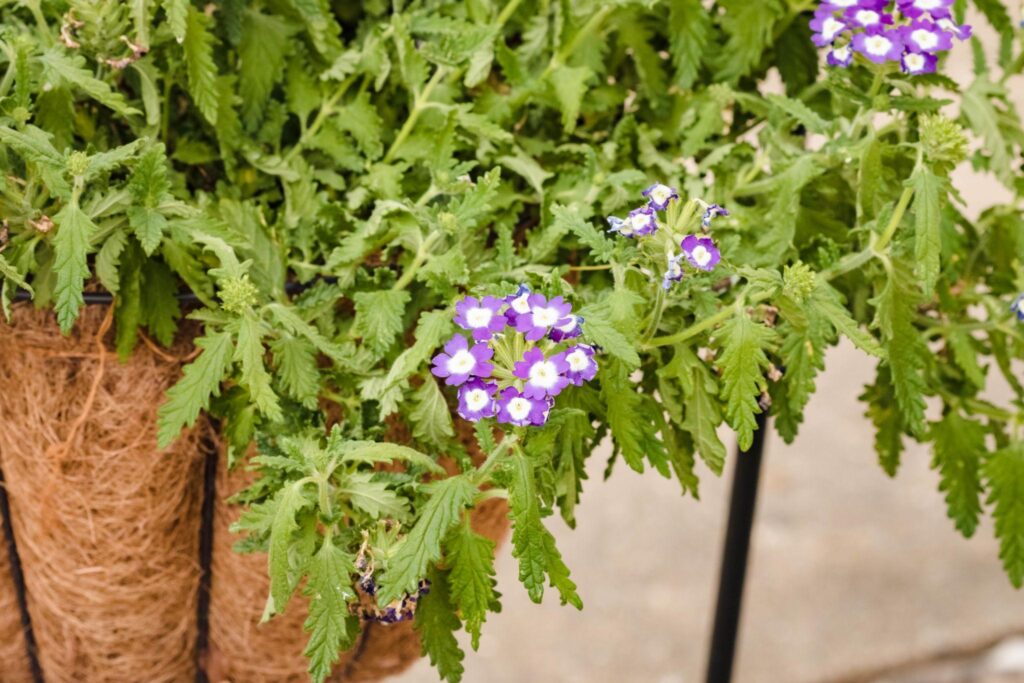
Verbena is a soft annual herb that grows either as a compact mound or as a spreading plant depending on the variety. The stems are slender and branch freely, creating a dense plant structure. Leaves are slightly rough, toothed, and medium green in color.
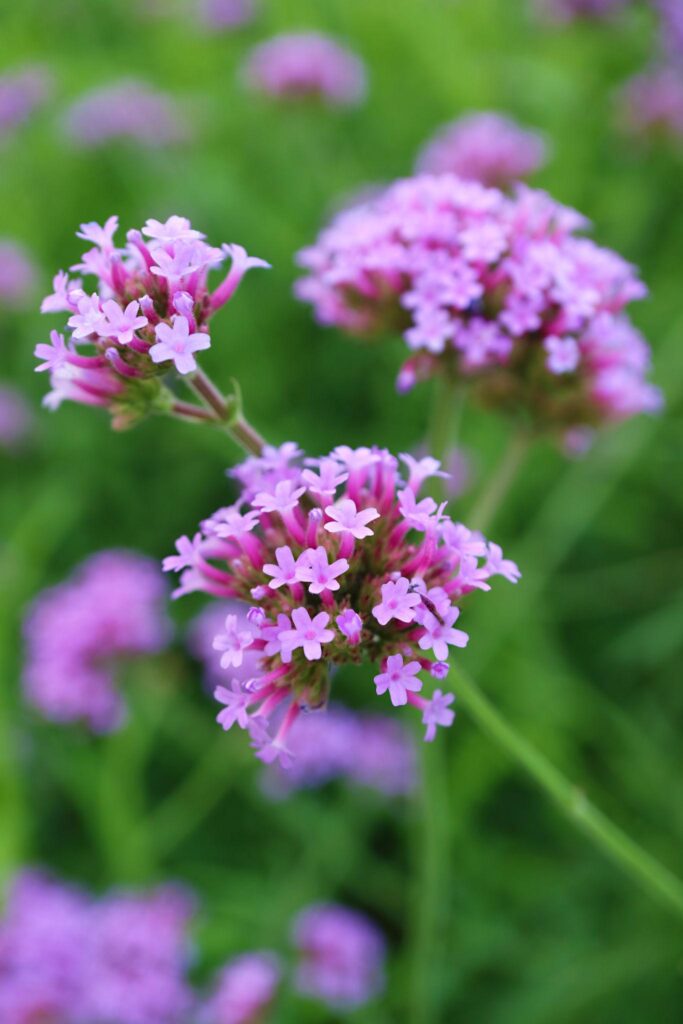
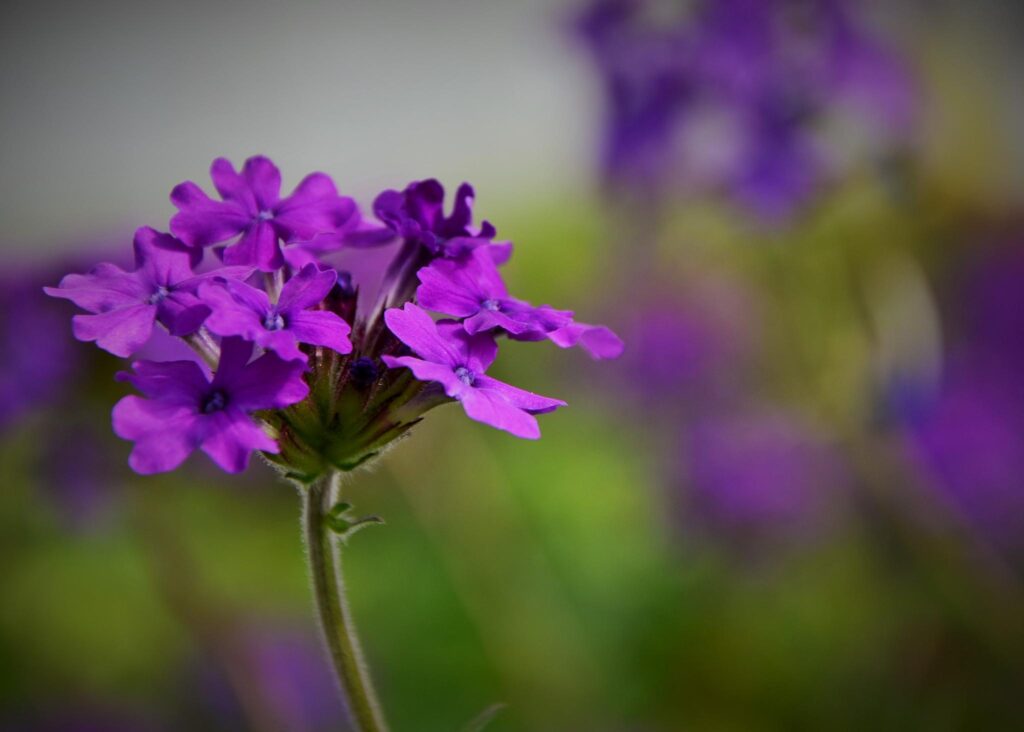
The flowers are small but appear in clusters at the tips of stems. Each cluster contains many tiny blooms forming a rounded head of color. Shades include red, pink, purple, white, blue, and bi-color combinations. Because the plant flowers repeatedly, it maintains a colorful appearance for a long period.
Trailing varieties may spread along the ground or cascade over containers, while compact bedding types remain bushy and neat. This variation makes verbena useful for different garden designs.
Climate and Soil Requirement
Verbena grows best in mild to warm climates with good sunlight. It prefers temperatures between 18–30°C and performs very well in Nepal during winter and spring.
For best growth, choose a sunny location with at least six hours of light daily. Soil should be well drained and moderately fertile. Heavy clay soil should be improved with compost and sand so that excess water does not accumulate around roots.
Verbena tolerates short dry periods but flowers more heavily when the soil is kept lightly moist. Overly rich soil should be avoided, as excessive nitrogen leads to more leaves and fewer flowers.
Propagation and Planting Method
Verbena is commonly grown from seed, although nursery seedlings are also available. Seeds can be sown in trays or directly in beds depending on the gardener’s preference.
For nursery raising, sow seeds lightly on moist soil and cover very thinly. Germination may take 10–15 days. Seedlings are ready for transplanting when they develop 3–4 true leaves.
Spacing of about 25–30 cm between plants is suitable for bedding types, while trailing varieties may need slightly more space to spread.
Planting is usually done in early winter or spring so that flowering continues into the warm season.
Care and Maintenance
Verbena requires moderate care but responds well to attention.
Water plants regularly but avoid keeping the soil constantly wet. Light drying between watering helps maintain healthy roots.
Applying compost before planting is usually sufficient, though a mild liquid fertilizer every two to three weeks encourages continuous flowering.
Deadheading, or removal of faded flower clusters, promotes new blooms and keeps the plant tidy. If plants become leggy, light trimming helps them produce fresh growth.
Weeding is important during early stages so that plants receive adequate nutrients and sunlight.
Pest and Disease Management
Verbena is generally hardy, but some problems may occur in warm and humid weather.
Aphids may attack tender shoots, causing leaf curling. Spider mites may appear in hot dry conditions, creating speckled leaves. Whiteflies sometimes feed on plant sap and weaken growth.
Neem oil spray works effectively as an organic control measure when applied weekly. Washing plants with mild soap solution also helps remove sucking insects.
Fungal problems such as powdery mildew or leaf spots may appear if plants are overcrowded or watered from above. Ensuring sunlight, spacing, and soil-level watering usually prevents these diseases.
Flowering and Garden Uses
Verbena typically begins flowering about 60–70 days after sowing and continues blooming for a long period. With proper care, it can flower almost continuously through the season.
In home gardens, verbena is valued for:
Colorful bedding displays
Ground cover planting in landscapes
Hanging baskets and container gardening
Butterfly-friendly garden designs
Mixed annual flower borders
Because of its long flowering period and wide color range, verbena is one of the best plants for maintaining a lively garden display over many months.