

Introduction
Salvia is one of the most striking and reliable annual flowering plants grown in home gardens, parks, and landscape beds. It is especially valued for its upright flower spikes, vibrant colors, and ability to bloom for a long period with relatively little care. Because of its strong visual impact, salvia is commonly planted in flower beds, borders, and public garden displays.
Native to Central and South America, many annual salvia varieties have been developed for ornamental use. In Nepal, salvia grows best during winter and spring when the climate is mild and sunlight is abundant. Gardeners appreciate salvia because it germinates easily from seed and produces bright flowers within a short time.
Its compact growth, bold flower spikes, and adaptability to garden beds and containers make salvia one of the best choices for seasonal ornamental planting. It also attracts pollinators such as bees and butterflies, adding ecological value to the garden.
Scientific Classification
Kingdom: Plantae
Division: Magnoliophyta
Class: Magnoliopsida
Order: Lamiales
Family: Lamiaceae
Genus: Salvia
Common ornamental species: Salvia splendens
Common name: Annual salvia
Native origin: Brazil and Central America
Popular garden types include dwarf bedding salvia and taller varieties used for mass planting.
Identification of Plant
Salvia is a compact annual herb that grows in a bushy form with multiple upright stems. Leaves are green, slightly textured, and arranged opposite each other along the stem.
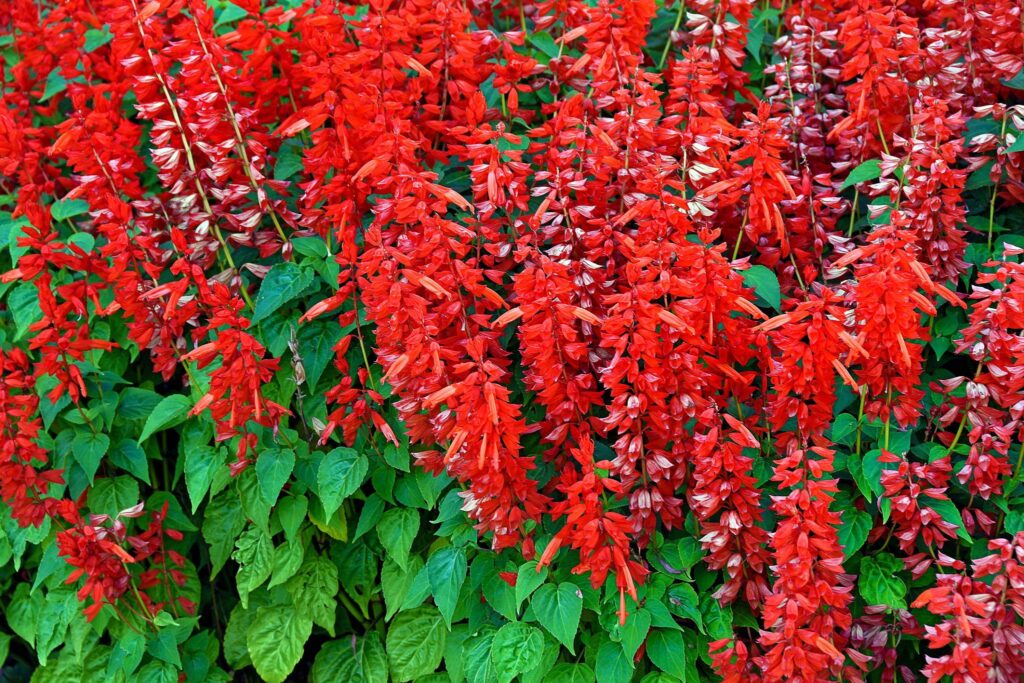
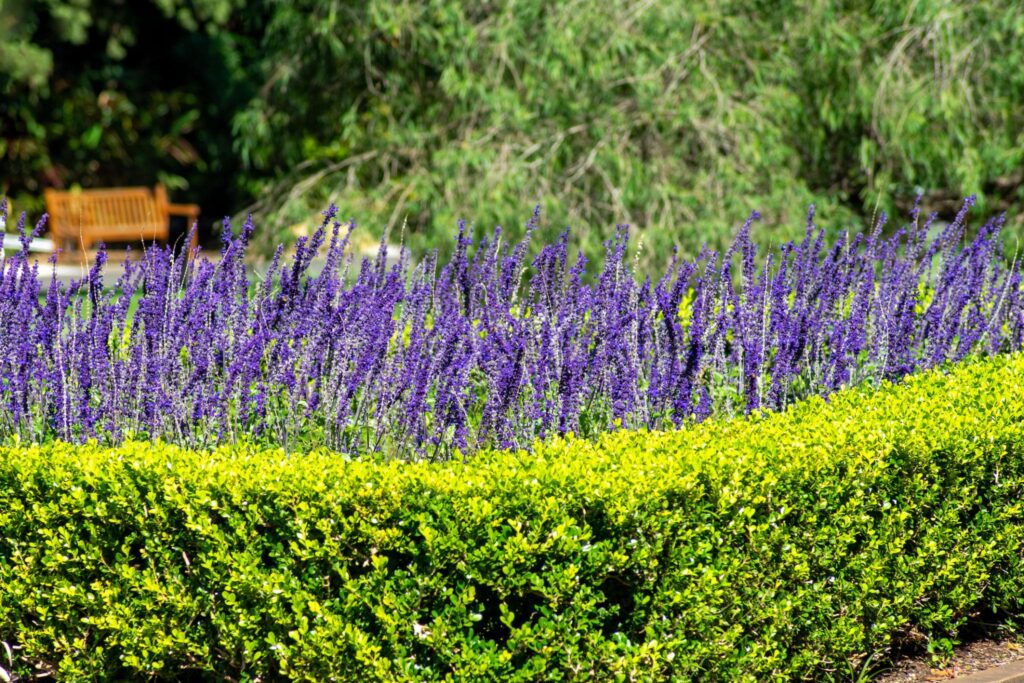
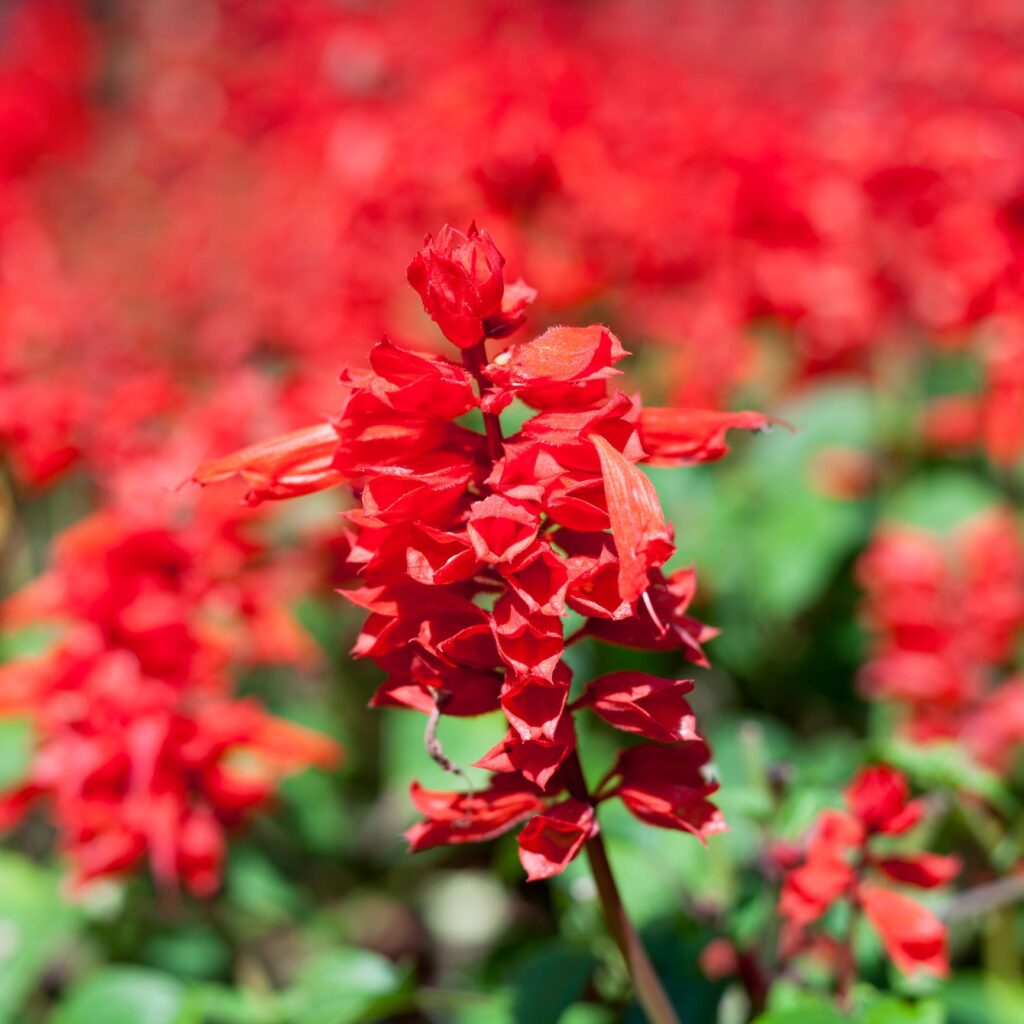
The most distinctive feature of the plant is its flower spike. Each stem produces a vertical cluster of small tubular flowers that form a dense, cone-shaped bloom. Colors include red, scarlet, purple, pink, and white, with red being the most commonly planted variety.
Because of its upright flowering spikes, dense structure, and bright color, salvia is easily recognizable in flower beds. The plant typically grows 25–40 cm tall and forms a neat, uniform display when planted in groups.
Climate and Soil Requirement
Salvia grows best in cool to moderately warm climates and prefers plenty of sunlight. It performs well in temperatures between 15–28°C, which makes it suitable for winter and spring gardening in Nepal.
Choose a sunny location where plants receive at least five to six hours of light daily. Soil should be well drained and moderately fertile. Adding compost before planting improves structure and nutrient availability.
Salvia prefers moderate soil fertility rather than excessively rich conditions. Too much nitrogen fertilizer encourages leafy growth instead of flowers. Proper drainage is important to avoid root diseases.
Propagation and Planting Method
Salvia is commonly grown from seed, though nursery seedlings are also available.
For nursery sowing, spread seeds lightly over moist soil and cover with a thin layer of fine compost. Germination usually occurs within 7–12 days in warm conditions. Seedlings are ready for transplanting after about three to four weeks when they develop several true leaves.
Spacing of about 20–25 cm between plants is ideal for bedding displays. Planting is usually done in early winter so that flowering continues through spring.
Direct sowing in beds is also possible, but nursery raising allows better control over spacing and plant quality.
Care and Maintenance
Salvia is easy to maintain and responds well to simple care.
Water plants regularly but moderately. The soil should remain slightly moist but never waterlogged. Watering at the base rather than on leaves helps reduce disease problems.
Applying compost before planting usually supplies sufficient nutrients. However, a light liquid fertilizer every two to three weeks encourages continuous flowering and keeps plants healthy.
Removing faded flower spikes helps stimulate new blooms and maintains a neat appearance. This simple practice supports continuous flower production throughout the season.
Weeding is important during early growth stages so that plants receive enough sunlight and nutrients. Once established, salvia forms a dense canopy that naturally suppresses weeds.
Pest and Disease Management
Salvia is generally hardy but may occasionally face minor pest issues.
Aphids may attack young shoots, causing distorted leaves and reduced growth. Whiteflies may also feed on plant sap in warm conditions. Occasionally, spider mites may appear during dry weather.
Neem oil spray works well as an organic preventive measure when applied weekly. Washing plants with mild soap solution also helps remove sucking insects effectively.
Fungal problems such as leaf spots or mildew may develop if plants are overcrowded or watered excessively. Ensuring good spacing, sunlight, and soil drainage helps prevent these diseases.
Maintaining a well ventilated planting area and avoiding excess fertilizer keeps plants strong and resistant.
Flowering and Garden Uses
Salvia begins flowering about 50–60 days after planting and continues producing blooms for many weeks. When planted in rows or blocks, it creates a bold color display that stands out in any garden.
In home gardening, salvia is valued for:
Seasonal bedding displays in parks and gardens
Colorful borders and edging plantings
Container and terrace gardening
Pollinator-friendly planting designs
Creating bright vertical color accents in flower beds
Because of its uniform growth and long flowering period, salvia remains one of the most reliable ornamental plants for structured garden layouts.