

Major Pests of Paddy and Their Management
Paddy crops are attacked by different insect pests during nursery, vegetative and flowering stages. These pests damage leaves, stems, tillers and panicles, which can reduce crop yield. Below are five important paddy pests with their symptoms, identification points and management practices.
1. Leaf Folder / Leaf Roller
Cnaphalocrocis medinalis / Marasmia patnalis
[Image will be added here]
Image Name: Leaf folder damage in paddy
Symptoms of Damage
- Larva folds the leaves longitudinally.
- Larva remains inside the folded leaf.
- Green tissues of the leaves are scraped.
- Scraped leaves later become white and dry.
- Severe infestation gives the field a scorched appearance.
Identification of Insect Pest
- Egg: Flat, oval and yellowish white in colour.
- Larva: Greenish and translucent.
- Adult: Yellowish brown moth.
- Adult has dark wavy lines in the centre of the wings.
- Wings have a dark band on the margin.
Management
- ETL: 10% leaf damage at vegetative stage.
- ETL: 5% flag leaf damage at flowering stage.
- Release Trichogramma chilonis.
- Avoid excessive nitrogen fertilizer.
- Keep the bunds clean.
- Spray NSKE 5% or Azadirachtin 0.03%.
- Use recommended insecticides only after proper field diagnosis.
2. Gall Midge
Orseolia oryzae
[Image will be added here]
Image Name: Gall midge onion leaf symptom
Symptoms of Damage
- Maggot feeds at the base of the growing shoot.
- Feeding causes tube-like gall formation.
- Gall appears like an onion leaf or silver shoot.
- Infested tillers do not produce panicles.
Identification of Pest
- Egg: Elongate and cylindrical.
- Eggs may be white, red or pinkish.
- Eggs are laid singly or in clusters near the base of leaves.
- Maggot: Small and feeds inside the growing point.
- Pupa: Wriggles up the tube before adult emergence.
- Adult: Yellowish brown or orange mosquito-like fly.
Management
- ETL: 10% silver shoots.
- Collect and destroy affected galls.
- Release parasitized larvae where available.
- Harvest and plough the field immediately after crop maturity.
- Remove alternate hosts.
- Adopt early planting.
- Apply optimum potash fertilizer.
- Set up infrared light traps to monitor adult flies.
- Use recommended insecticides when infestation crosses ETL.
3. Yellow Stem Borer
Scirpophaga incertulas
[Image will be added here]
Image Name: Yellow stem borer dead heart and white ear damage
Symptoms of Damage
- Larva bores into the central shoot.
- Damage in young plants causes dead heart.
- Damage in grown-up plants causes white ear.
- Central shoot dries and can be pulled out easily.
- Whole panicle becomes dried and whitish.
- Affected shoots and panicles can be easily pulled by hand.
Identification of Pest
- Egg: Creamy white, flat and oval.
- Eggs are laid in masses.
- Egg masses are covered with buff-coloured hairs.
- Larva: Pale yellow with dark brown head.
- Pupa: Yellowish white with green tinge.
- Pupa remains inside a whitish silken cocoon.
- Female moth: Bright yellowish brown with a black spot on the forewing.
- Male moth: Smaller and pale yellow.
Management
- ETL: 10% dead heart.
- ETL: 2% white ear.
- Clip seedling tips before transplanting.
- Install light traps.
- Install pheromone traps.
- Release Trichogramma japonicum.
- Spray neem seed kernel extract 5% or Azadirachtin 0.03%.
- Use recommended insecticides only when necessary.
4. Brown Plant Hopper
Nilaparvata lugens
[Image will be added here]
Image Name: Brown plant hopper and hopper burn in paddy
Symptoms of Damage
- Nymphs and adults stay at the base of the plant.
- They suck sap from the plant.
- Affected plants turn yellow and dry.
- Severe damage causes hopper burn.
- Circular patches of drying and lodging appear in the field.
- Honeydew secretion causes sooty mould at the plant base.
- It can transmit grassy stunt, ragged stunt and wilted stunt diseases.
Identification of Insect Pest
- Egg: Laid in groups inside the leaf sheath.
- Eggs are found near the base of the plant.
- Nymph: Newly hatched nymphs are cottony white.
- Older nymphs become brownish.
- Adult: Yellowish brown to dark brown.
- Adults may be long-winged or short-winged.
Management
- ETL: 1 hopper per tiller when predatory spiders are absent.
- ETL: 2 hoppers per tiller when predatory spiders are present.
- Avoid close planting.
- Maintain proper spacing.
- Avoid excessive nitrogen fertilizer.
- Follow alternate wetting and drying irrigation.
- Use light traps during night.
- Drain water before spraying insecticides.
- Direct spray towards the base of plants.
- Use recommended insecticides only after monitoring pest population.
5. Thrips
Stenchaetothrips biformis
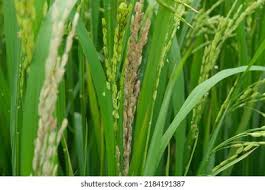
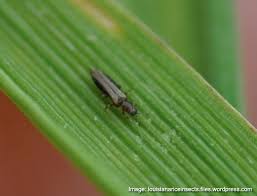
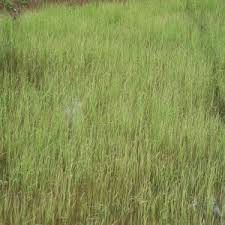
Images : Thrips damage in nursery and main field
Symptoms of Damage
- Leaves show discolouration.
- Leaves start rolling.
- Yellow or silvery streaks appear on young leaves.
- Leaves dry from tip to base.
- Leaf tips wither in severe infestation.
- Damage occurs both in nursery and main field.
Identification of Insect Pest
- Egg: Laid singly or in small groups.
- Eggs are laid inside young leaf tissues.
- Nymph: Transparent in early stage.
- Nymphs later turn pale yellow.
- Adult: Slender and dark brown.
- Adult is about 1–2 mm long.
- Adult may be winged or wingless.
- Winged adults have narrow wings fringed with long hairs.
Management
- ETL: 60 thrips in 12 wet palm sweeps.
- ETL: Rolling of half leaf area in 10% seedlings.
- Monitor nursery and main field regularly.
- Avoid severe water stress in nursery.
- Spray Azadirachtin 0.15%.
- Use Thiamethoxam 25 WG when recommended.
- Follow local agricultural advice before pesticide use.
Conclusion
- Regular field monitoring is important for early pest detection.
- Correct identification helps farmers choose proper control methods.
- Avoid unnecessary pesticide use.
- Use biological control, cultural practices, traps and neem-based products first.
- Apply chemical control only when pest population crosses ETL.
- Always follow local agricultural recommendations and pesticide safety instructions.