

Introduction
Ageratum is one of the most attractive and widely used annual bedding flowers grown in home gardens, parks, and landscape borders. It is especially valued for its soft, fluffy flower clusters and cool shades of blue, lavender, pink, and white. Because true blue flowers are relatively rare in seasonal gardens, ageratum is often planted to add contrast and balance to mixed flower beds.
Native to Central America and Mexico, ageratum has adapted well to different climates and soil conditions. In Nepal, it grows successfully during winter and spring in most regions, and in cooler hill areas it can also perform well into early summer. Gardeners prefer ageratum because it grows easily from seed, remains compact, and produces flowers continuously for a long period.
Its uniform height, bushy structure, and soft-textured blooms make ageratum ideal for edging, bedding displays, and container planting. It combines beautifully with other seasonal flowers such as marigold, petunia, and salvia.
Scientific Classification
Kingdom: Plantae
Division: Magnoliophyta
Class: Magnoliopsida
Order: Asterales
Family: Asteraceae
Genus: Ageratum
Species: Ageratum houstonianum
Common name: Ageratum, floss flower
Native origin: Central America
Most ornamental varieties grown in gardens are compact hybrids selected for dense flowering and uniform growth.
Identification of Plant
Ageratum is a small annual herb that grows as a bushy mound, usually reaching 20–40 cm in height. The stems branch freely, forming a dense canopy of foliage. Leaves are soft, heart-shaped to oval, and slightly hairy with serrated edges.
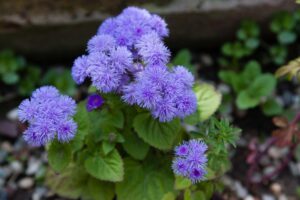
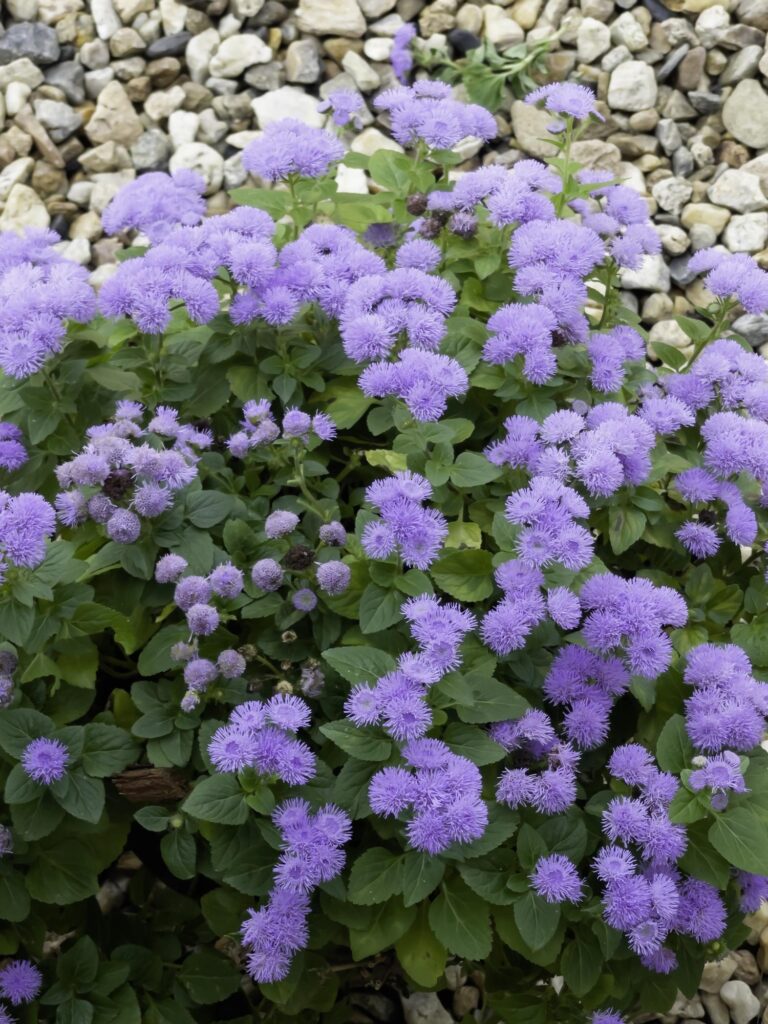
The flowers are the most distinctive feature of the plant. Instead of typical petals, ageratum produces small, tufted blooms composed of fine thread-like florets. These blooms appear in clusters at the tips of stems, giving the plant a fluffy appearance.
Colors range from soft blue and lavender to pink and white. Blue varieties are especially popular because they contrast well with warm-colored flowers in garden beds. Because of its compact growth and soft blooms, ageratum is easily recognized among seasonal flowers.
Climate and Soil Requirement
Ageratum prefers cool to moderately warm conditions and performs best in temperatures between 15–28°C. It grows well in Nepal during winter and spring when the weather remains mild and sunny.
Choose a location receiving at least five to six hours of sunlight daily. Soil should be loose, fertile, and well drained. Mixing compost or organic manure before planting improves growth and flowering.
Ageratum prefers moderate fertility rather than extremely rich soil. Excess nitrogen may produce more leaves and fewer flowers. Good drainage is essential to avoid root problems.
Propagation and Planting Method
Ageratum is commonly grown from seed and is usually raised in nursery trays before transplanting.
Sow seeds lightly on moist soil and cover with a thin layer of fine compost. Germination usually occurs within 7–12 days under suitable conditions. Seedlings are ready for transplanting after about three to four weeks when they develop several true leaves.
Spacing of about 20–25 cm between plants is suitable for bedding displays. Planting is usually done in early winter so that flowering continues into spring.
Direct sowing is possible but nursery raising ensures better plant quality and spacing.
Care and Maintenance
Ageratum is relatively easy to maintain and suitable for beginner gardeners.
Water plants regularly but moderately, ensuring the soil remains slightly moist but never waterlogged. Watering at the base rather than on leaves helps reduce disease risk.
Applying compost before planting usually provides sufficient nutrients for the season. However, a light liquid fertilizer every two to three weeks encourages continuous flowering.
Pinching young plants once encourages branching and results in a bushier structure with more flower clusters. Removing faded blooms also helps maintain a neat appearance and promotes new bud formation.
Weeding during early stages ensures plants receive adequate nutrients and sunlight. Once established, the dense canopy naturally suppresses most weeds.
Pest and Disease Management
Ageratum is generally resistant to major pest problems, though minor issues may occur.
Aphids may attack tender shoots and buds, causing curling leaves and slow growth. Whiteflies may also appear in warm conditions and feed on plant sap.
Neem oil spray applied weekly works well as an organic preventive treatment. Washing plants with mild soap solution also helps remove sucking insects effectively.
Fungal diseases such as powdery mildew or root rot may occur if plants are overcrowded or soil remains excessively wet. Proper spacing, sunlight, and drainage usually prevent these problems.
Healthy plants grown in sunny conditions rarely suffer from serious issues.
Flowering and Garden Uses
Ageratum usually begins flowering about 55–65 days after planting and continues blooming for several weeks. When planted in groups, it forms a dense carpet of color that enhances the visual appeal of garden beds.
In home gardening, ageratum is widely used for:
Edging along pathways and flower beds
Mixed seasonal bedding displays
Container and terrace gardening
Soft color contrast with bright flowers
Pollinator-friendly planting schemes
Because of its compact height and continuous flowering, ageratum is especially useful for structured ornamental planting.