
Introduction
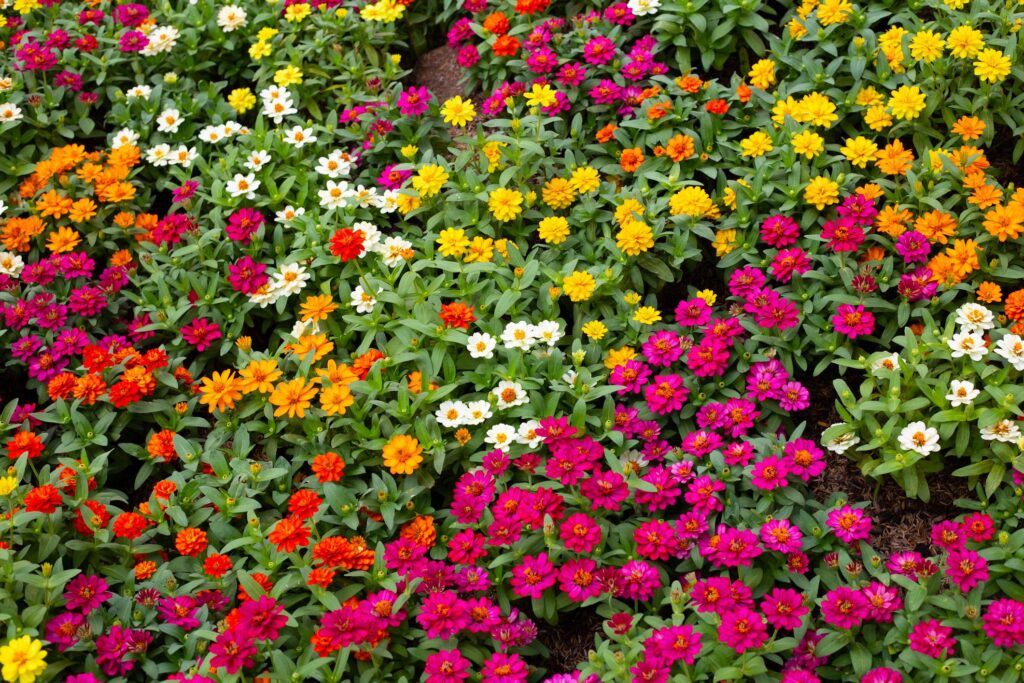
Zinnia is one of the most colorful and fast-growing annual flowers that can easily transform an ordinary garden into a vibrant floral display. It is especially popular for flower beds because of its upright growth, wide color range, and ability to bloom continuously throughout the warm season. For beginners and experienced gardeners alike, zinnia is considered one of the most dependable ornamental plants.
Native to Mexico and parts of Central America, zinnia thrives in warm climates and adapts well to the conditions of South Asia, including Nepal. The plant is valued not only for its beauty but also for its usefulness in attracting butterflies and pollinators to the garden. Because it grows quickly from seed and flowers within a short time, it is widely used in school gardens, home flower beds, and landscape borders.
Zinnia’s simple cultivation, strong stems, and long-lasting blooms make it a favorite choice for gardeners who want a bright and cheerful garden with minimal effort.
Scientific Classification
- Kingdom: Plantae
- Division: Magnoliophyta
- Class: Magnoliopsida
- Order: Asterales
- Family: Asteraceae
- Genus: Zinnia
- Common name: Zinnia
- Native origin: Mexico and Central America
Common garden species include:
- Zinnia elegans – tall varieties for flower beds
- Zinnia angustifolia – shorter, compact plants
- Hybrid bedding zinnias – improved disease resistance and color diversity
Identification of Plant
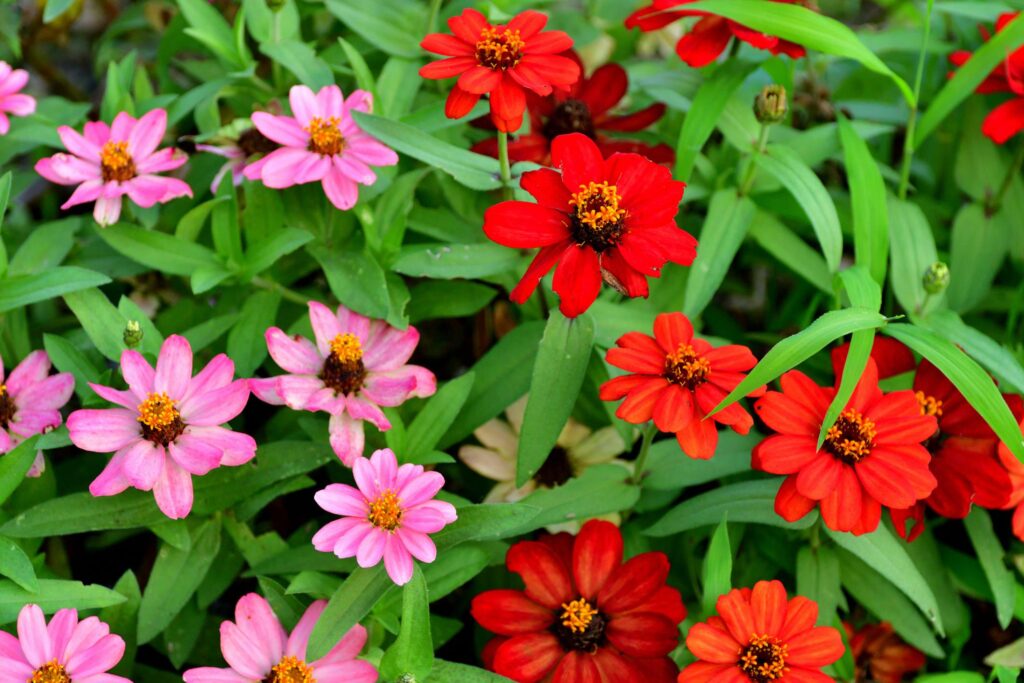
Zinnia is an annual herb that grows upright with strong, straight stems and simple oval-shaped leaves. The leaves are slightly rough in texture and arranged opposite each other on the stem. As the plant grows, it develops multiple branches, each producing a flower at the tip.
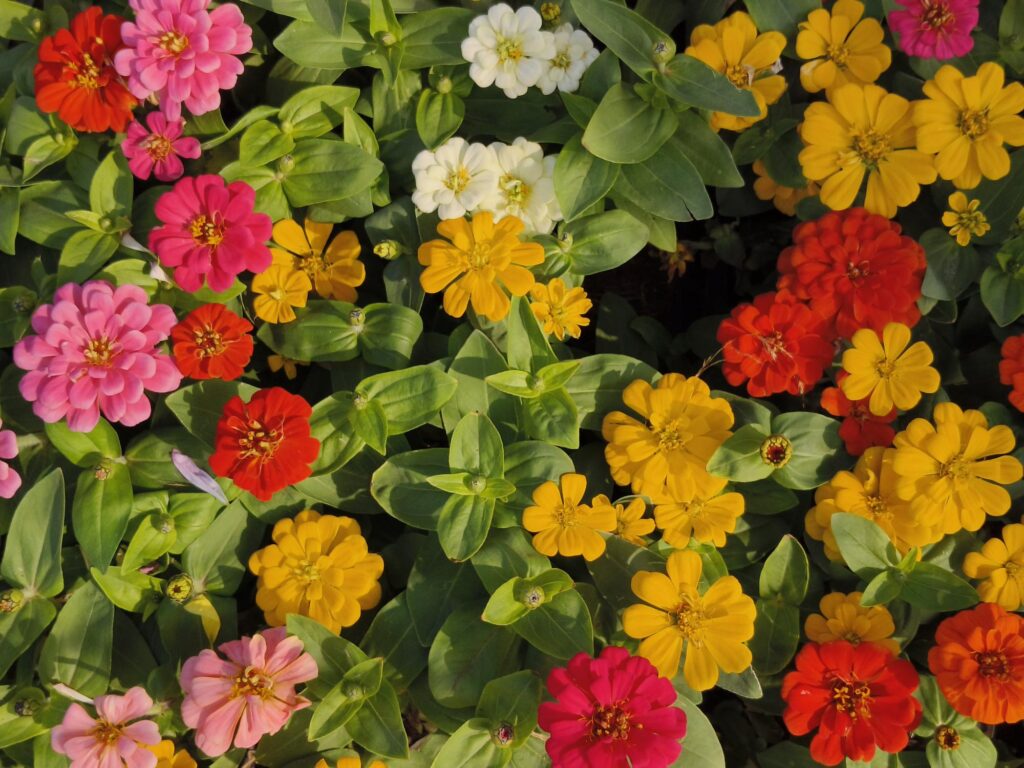
The flowers are daisy-like with a central disc surrounded by colorful petals. They come in many shades such as red, pink, orange, yellow, white, purple, and bi-color combinations. Some varieties have single petals, while others produce dense double blooms that resemble small chrysanthemums.
Because of its sturdy stems, bright flowers, and upright habit, zinnia is easily recognizable in any flower bed.
Climate and Soil Requirement
Zinnia prefers warm temperatures and plenty of sunlight. It grows best in temperatures between 20–32°C, which makes it very suitable for the Terai and mid-hill regions of Nepal during spring, summer, and early autumn.
For successful growth in flower beds:
- Select a location receiving full sunlight for at least 6 hours daily
- Use well-drained soil enriched with compost or farmyard manure
- Avoid heavy clay soils that retain too much moisture
- Sandy loam soil supports better root development and flowering
Zinnia tolerates moderate drought once established but performs best when the soil remains lightly moist.
Propagation and Planting Method
Zinnia is very easy to grow from seed, which makes it ideal for direct sowing in flower beds. Seeds germinate quickly and grow vigorously when placed in warm soil.
Direct Sowing
- Sow seeds 1–1.5 cm deep directly in prepared beds
- Maintain spacing of 25–30 cm for medium varieties
- Tall varieties may need 35–40 cm spacing
- Germination usually occurs in 5–7 days
Transplanting
Zinnia can also be raised in nursery trays, but direct sowing is preferred because the plant does not like root disturbance.
Planting is usually done from late winter to early summer depending on the local climate.
Care and Maintenance
Zinnia requires simple care but responds very well to proper maintenance.
Watering
Water plants at the base rather than from above to prevent leaf diseases. Allow soil to dry slightly between watering.
Pinching
Pinch young plants once when they reach about 15–20 cm height. This promotes branching and increases the number of flowers.
Fertilization
- Add compost before planting
- Apply balanced fertilizer every 2–3 weeks
- Avoid excessive nitrogen which reduces flowering
Weeding and Spacing
Keep beds weed-free and maintain airflow between plants to reduce disease risk.
Pest and Disease Management
Although zinnia is generally hardy, some pests and diseases may appear, especially in humid conditions.
Common Pests
- Aphids sucking plant sap
- Caterpillars feeding on leaves and buds
- Whiteflies causing leaf yellowing
Management Practices
- Spray neem oil weekly for prevention
- Remove damaged leaves and infected buds
- Encourage airflow by proper spacing
- Avoid overhead watering
Common Diseases
Powdery mildew is the most common issue, appearing as a white powdery layer on leaves. Growing plants in sunny, well-spaced beds and watering at soil level helps prevent this problem.
Flowering and Garden Uses
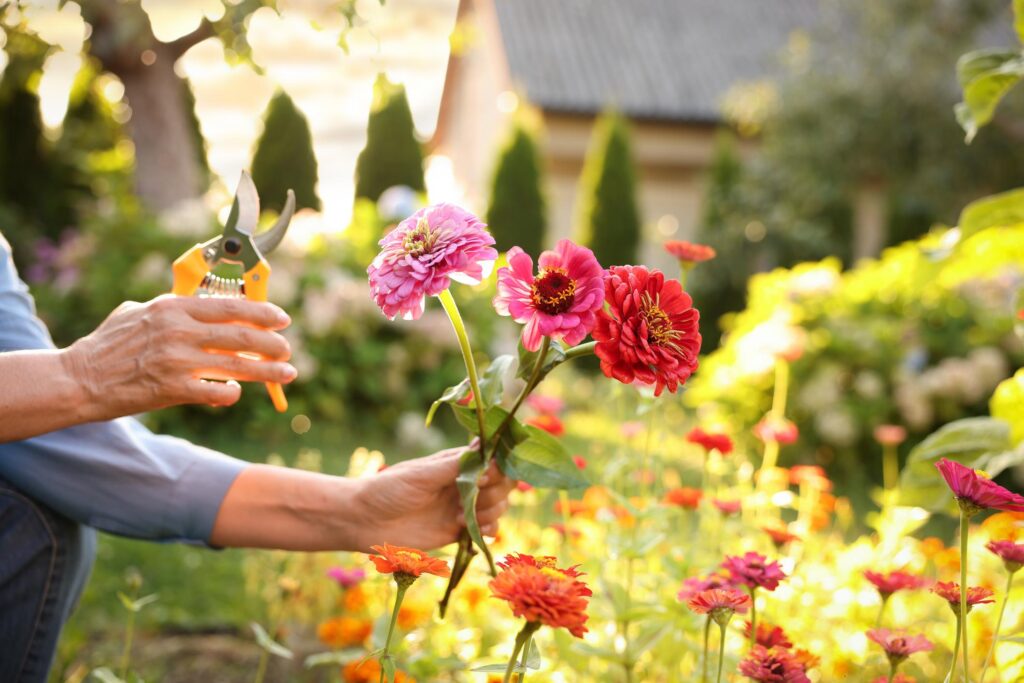
Zinnia usually begins flowering about 45–55 days after sowing and continues blooming for several months. Regular removal of faded flowers encourages the plant to produce more buds.
In home gardens, zinnia is widely used for:
- Bright flower beds and borders
- Butterfly gardens and pollinator-friendly spaces
- Cut flowers for indoor decoration
- Mass planting in public landscapes
- Mixed annual flower displays
Because of its strong stems and long-lasting blooms, zinnia is also one of the best flowers for bouquets.