

Introduction
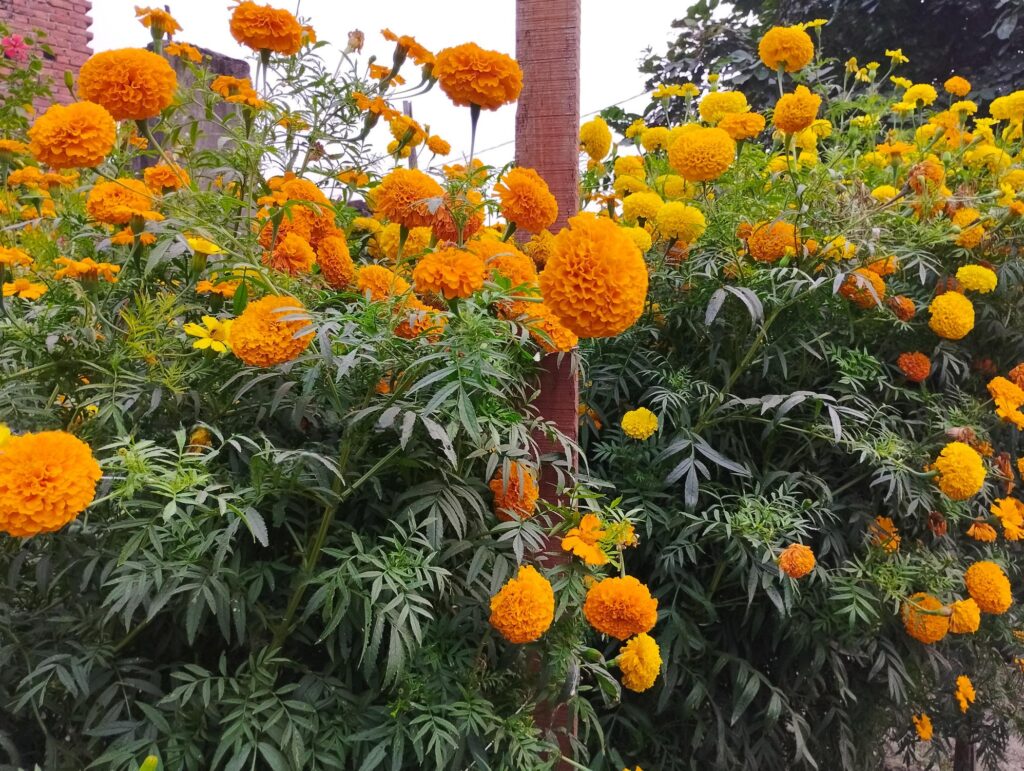
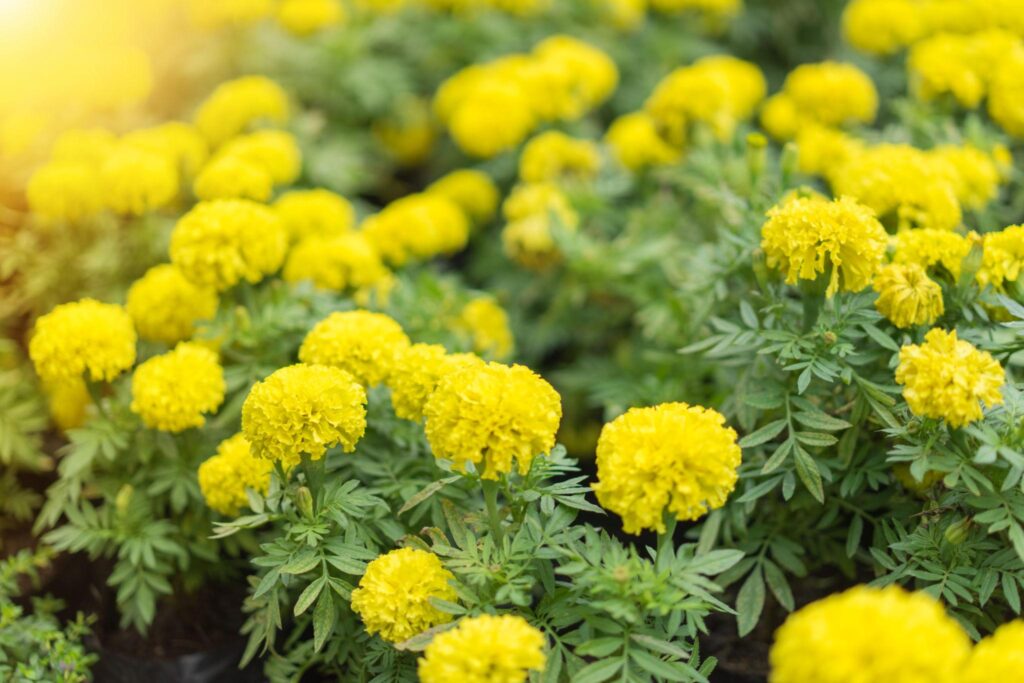
Marigold is one of the easiest and most rewarding flowers to grow in a home garden. Known for its bright yellow, orange, and golden blooms, marigold adds instant color and cheerfulness to any space. It is widely planted in home gardens, kitchen gardens, terrace pots, and landscape borders because of its adaptability, long flowering period, and low maintenance requirements.
Originally native to Central and South America, marigold has spread across the world and is now among the most popular ornamental flowers in Asia, especially in Nepal and India. It is not only grown for decoration but also valued for religious uses, garlands, festival decoration, and even pest-repellent properties in vegetable gardens.
Because marigold grows quickly, flowers profusely, and tolerates different soil conditions, it is considered a perfect flower for beginners who want to start gardening at home.
Scientific Classification
- Kingdom: Plantae
- Division: Magnoliophyta
- Class: Magnoliopsida
- Order: Asterales
- Family: Asteraceae
- Genus: Tagetes
- Common name: Marigold
- Native origin: Central and South America
Two main types grown in home gardens:
- African marigold (Tagetes erecta) – tall plants with large blooms
- French marigold (Tagetes patula) – shorter plants with many small flowers
Identification of Plant
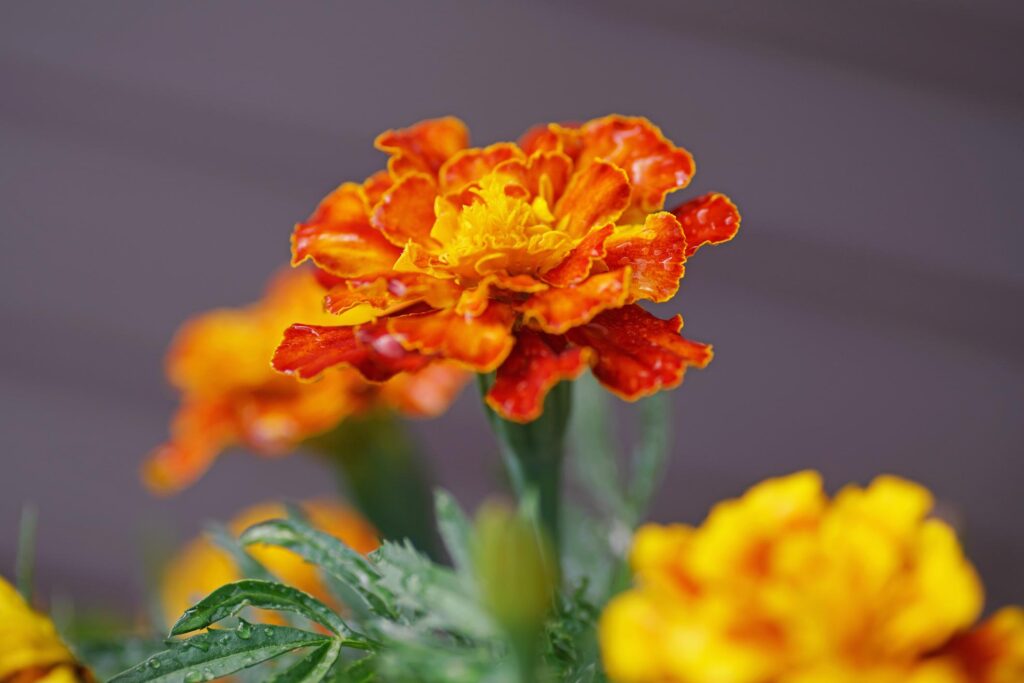
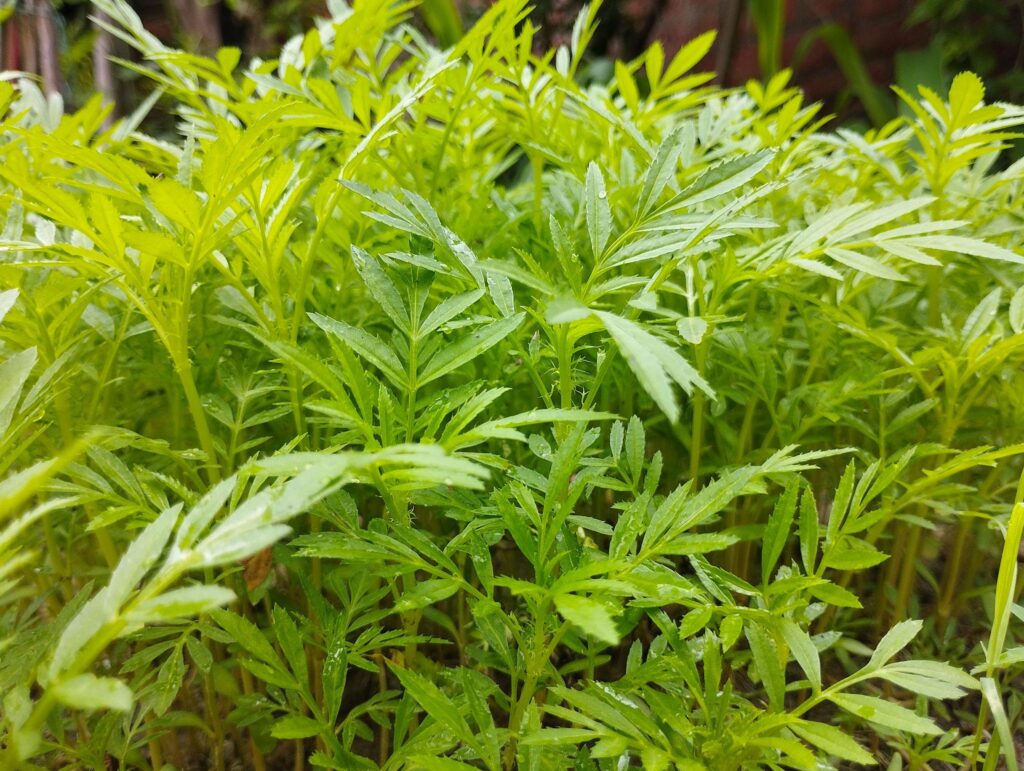
Marigold is an annual flowering plant that grows as a bushy herb with soft green stems and deeply divided aromatic leaves. The plant develops multiple branches, each ending in a flower bud that opens into a bright, round blossom.
The flowers may be single or double and come in shades of yellow, orange, lemon, golden, and mixed colors. African marigolds are usually taller and produce large ball-shaped flowers, while French marigolds are shorter and more compact with smaller but numerous blooms.
Its distinctive smell, feathery foliage, and bright flowers make marigold very easy to recognize in any garden.
Climate and Soil Requirement
Marigold grows best in warm climates and full sunlight. It thrives in temperatures between 18–30°C, which makes it suitable for most regions of Nepal except extremely cold winters in high hills.
For healthy growth and good flowering:
- Choose a sunny location receiving at least 5–6 hours of sunlight daily
- Use well-drained garden soil enriched with compost
- Avoid heavy clay soil that holds too much water
- Slightly fertile sandy loam soil works best
Marigold tolerates poor soils better than many flowers, but adding organic manure helps produce stronger plants and more flowers.
Propagation and Planting Method
Marigold is usually propagated by seed, which germinates quickly and reliably. Seeds can be sown directly in garden beds or first raised in nursery trays for transplanting.
Seed Sowing
- Sow seeds 1–2 cm deep in loose soil
- Keep soil moist but not waterlogged
- Germination occurs in 5–8 days
- Seedlings become ready for transplanting in 3–4 weeks
Transplanting
- Plant seedlings at spacing of 25–30 cm for French types
- 35–45 cm spacing for African types
- Water lightly after transplanting
Planting can be done in spring or early autumn for continuous flowering.
Care and Maintenance
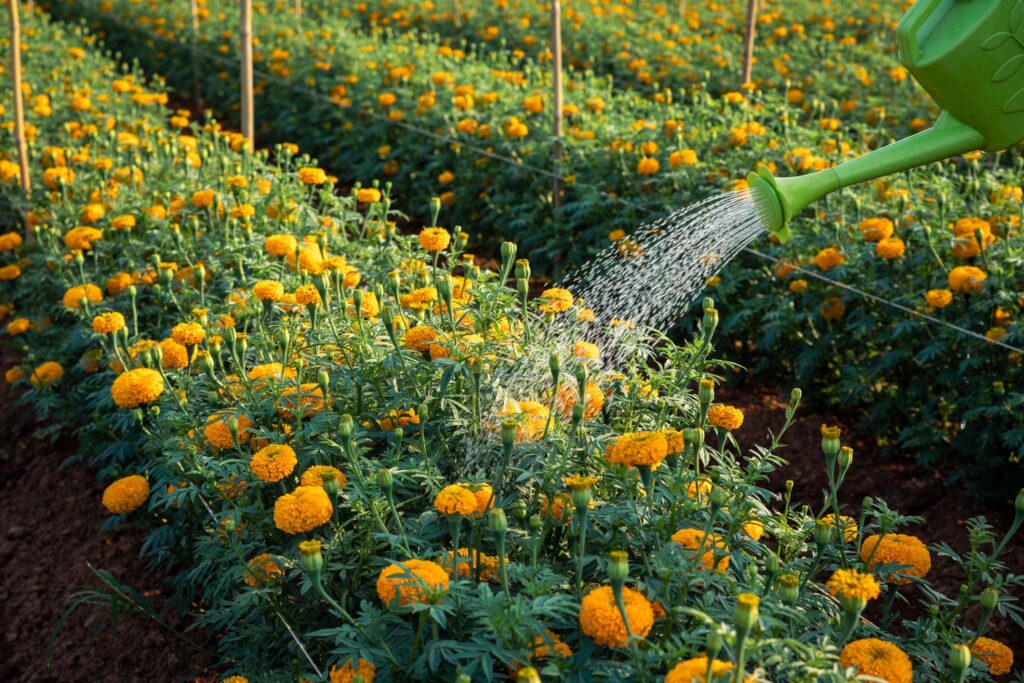
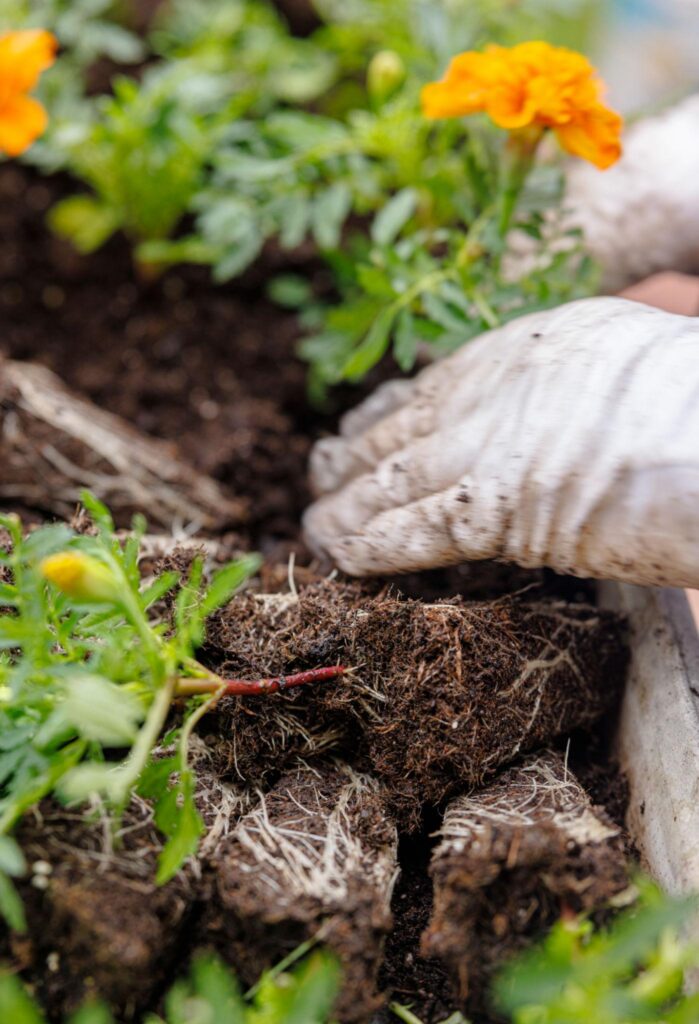
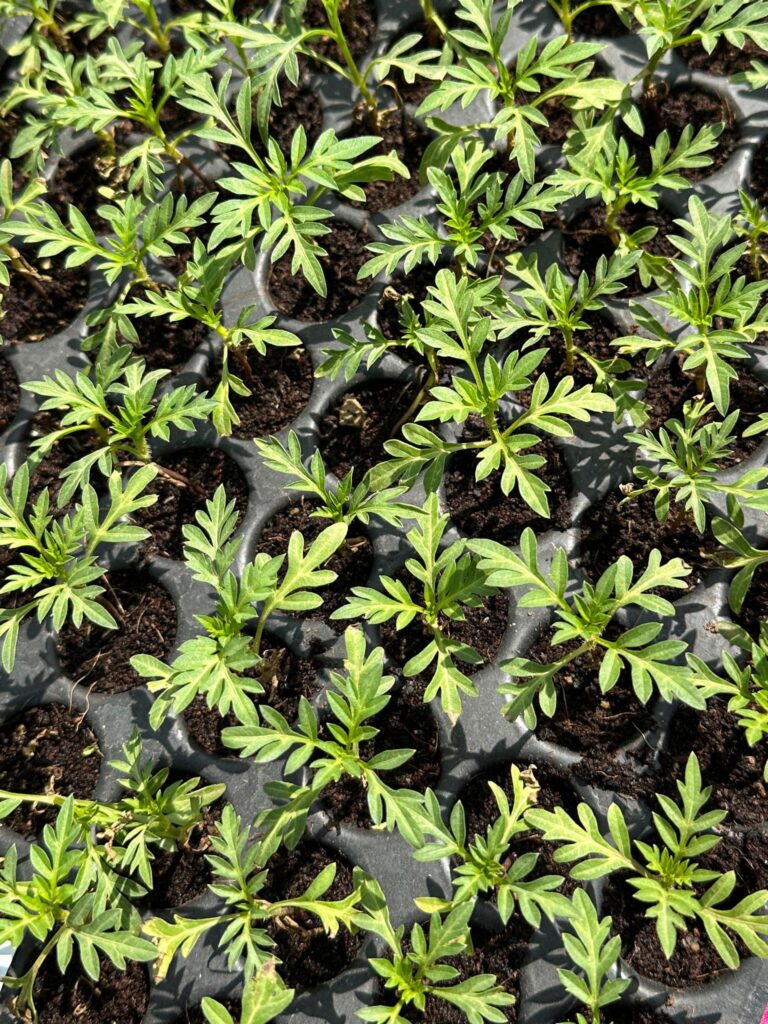
Marigold is easy to maintain and does not require heavy care, which makes it ideal for home gardeners.
Watering
Water plants regularly but avoid overwatering. Too much water may cause root rot.
Pinching
Pinch the top of young plants once to encourage bushy growth and more branches, which increases flower production.
Fertilization
- Mix compost in soil before planting
- Apply light liquid fertilizer every 15–20 days
- Excess nitrogen should be avoided as it produces more leaves than flowers
Weeding
Remove weeds regularly so plants get enough nutrients and sunlight.
Pest and Disease Management
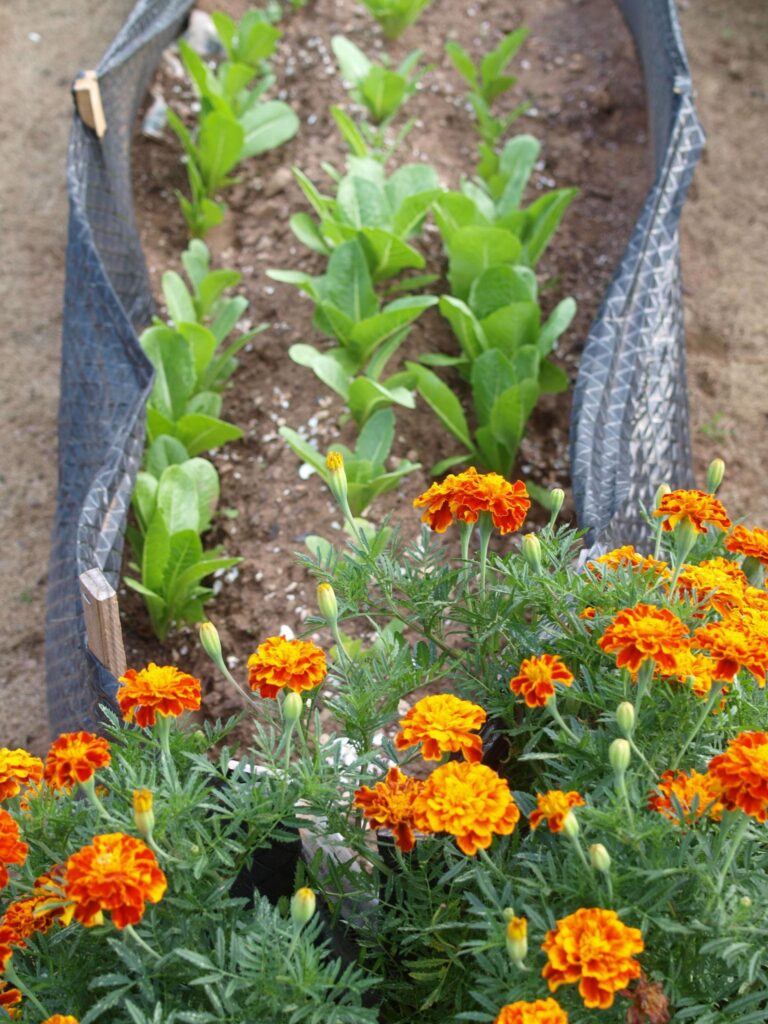
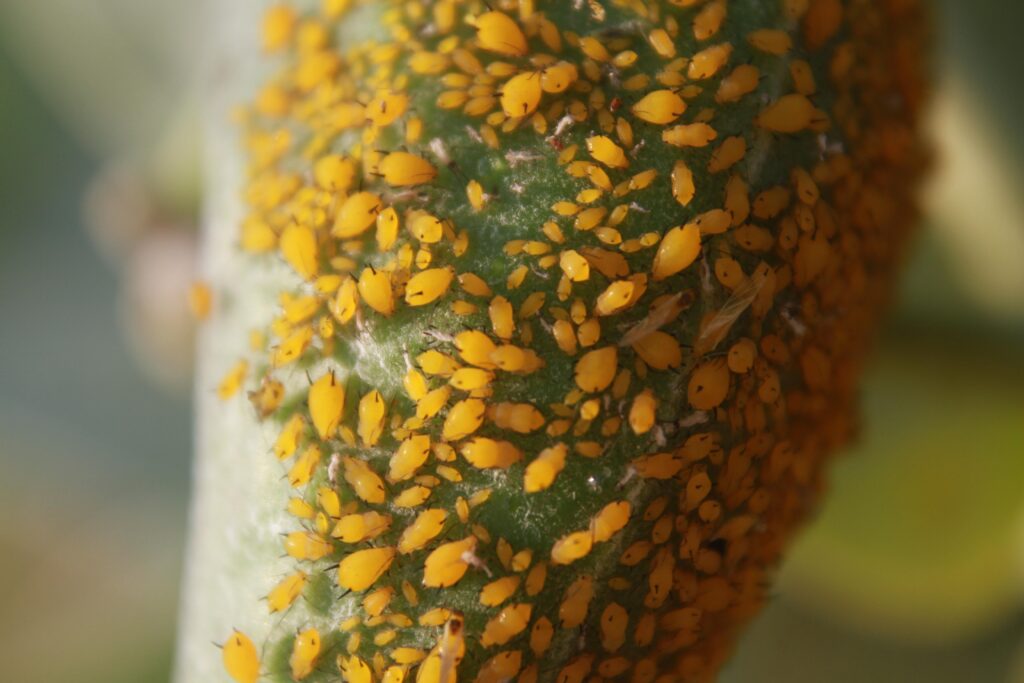
Marigold is naturally resistant to many pests and is even planted in vegetable gardens to repel insects. However, some minor problems may appear.
Common pests
- Aphids
- Spider mites
- Leaf miners
Control measures
- Spray neem oil solution weekly
- Remove heavily infested leaves
- Maintain proper spacing for airflow
Diseases
- Root rot due to overwatering
- Powdery mildew in humid conditions
Good drainage and sunlight usually prevent most problems.
Harvesting and Uses
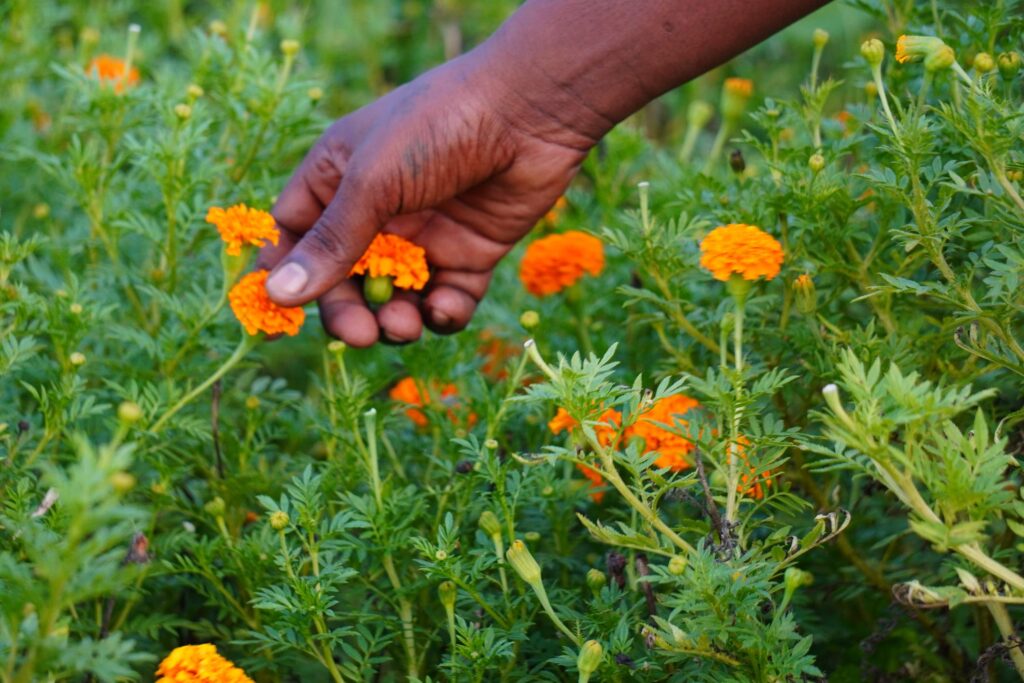
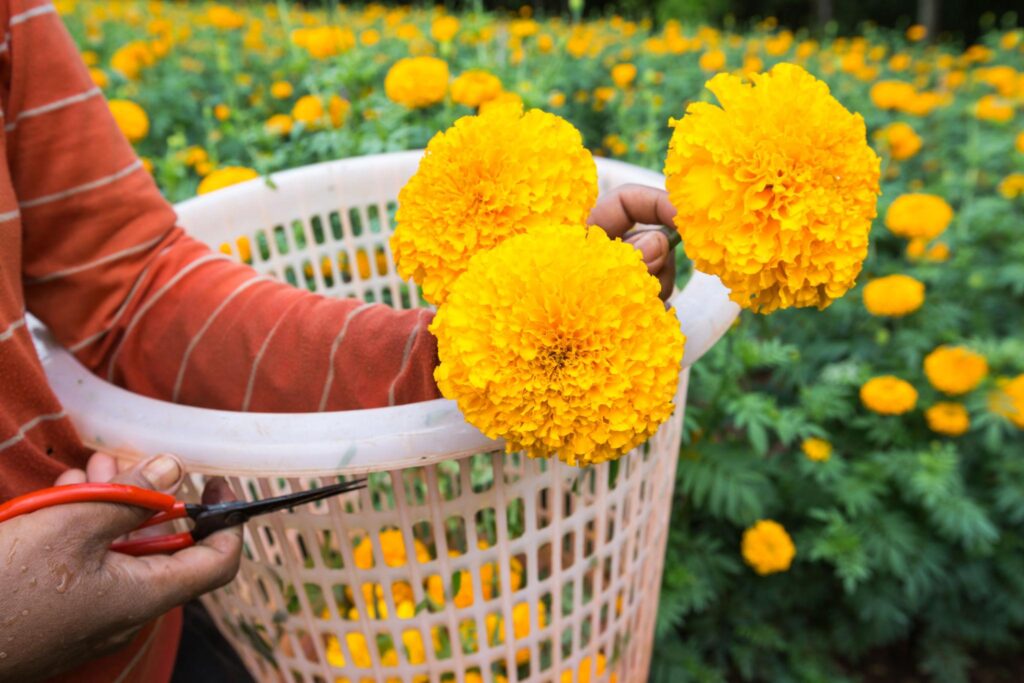
Marigold flowers start blooming 45–60 days after planting. Regular harvesting encourages the plant to produce more flowers.
How to Harvest
- Cut flowers in early morning
- Use clean scissors to avoid damaging plants
- Remove dried flowers regularly
Uses of Marigold
- Decoration of home gardens and borders
- Festival garlands and religious offerings
- Companion plant in vegetable gardens
- Natural insect repellent
- Used in landscaping and pots
Because of its multiple uses, marigold is one of the most valuable flowers for home gardening.